Resources

Artificial intelligence has become a cornerstone of modern business, powering everything from generative AI and intelligent automation to predictive analytics and autonomous agents. As organizations scale these capabilities, the infrastructure supporting AI including cloud platforms, GPUs, data pipelines, model repositories, APIs, and inference environments has become increasingly complex and security critical. Protecting these interconnected components requires more than traditional cybersecurity measures, as each introduces unique risks that can impact the integrity, availability, and confidentiality of AI systems.
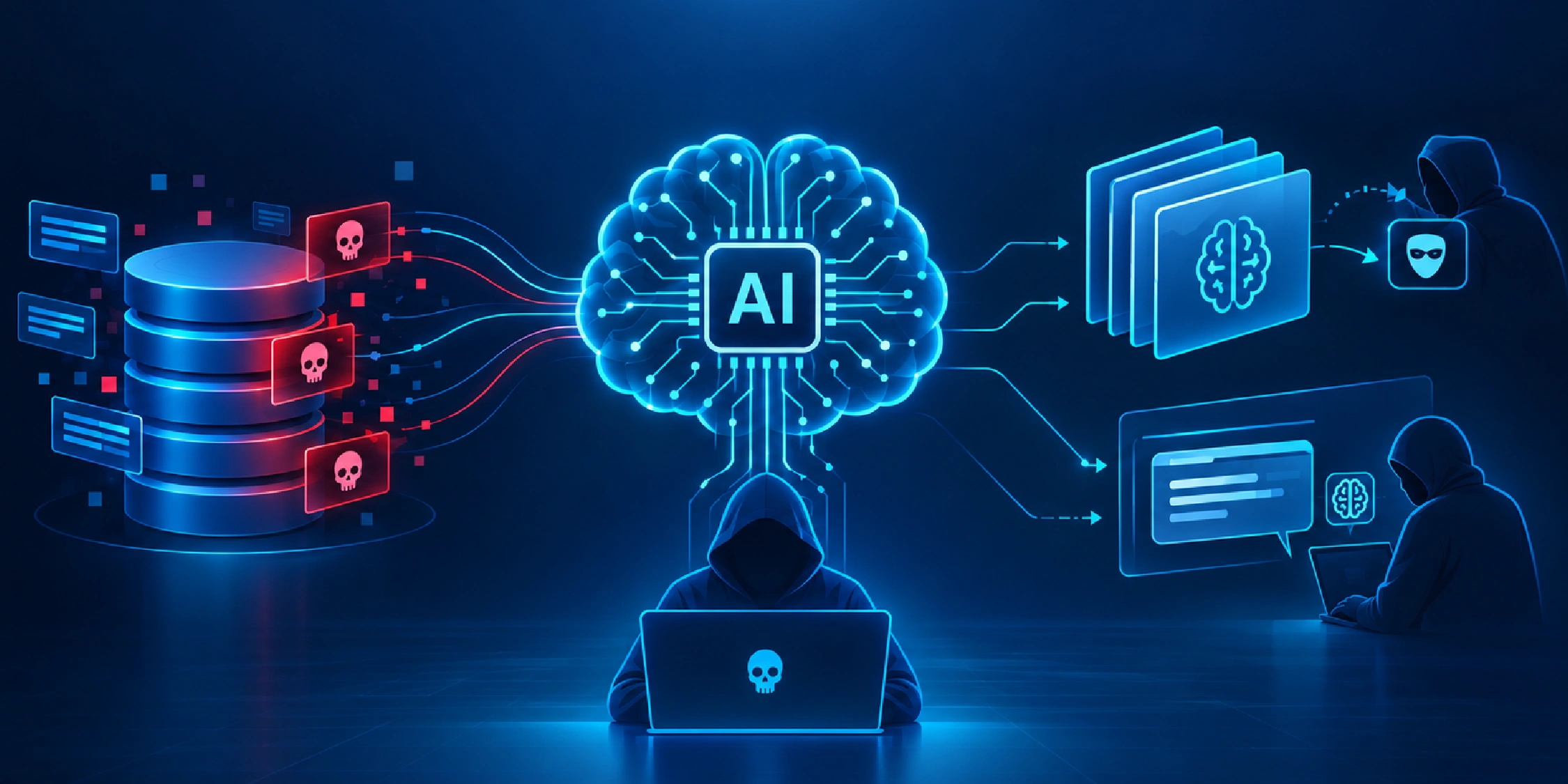
Unlike conventional IT environments, AI infrastructure processes massive volumes of sensitive data and relies on distributed, hybrid architectures that span public cloud and on-premises environments. This expanded attack surface exposes organizations to threats such as data poisoning, model theft, API abuse, unauthorized access, and compromised GPU resources. As AI becomes deeply embedded in business operations, organizations need a dedicated security strategy that safeguards every stage of the AI lifecycle from data ingestion and model training to deployment and inference.
• Compute: Cloud and on-premises resources that provide the processing power for AI workloads.
• GPUs & AI Servers: High-performance hardware designed to accelerate model training and inference.
• Data Storage & Pipelines: Systems for storing, processing, and moving the large datasets AI applications depend on.
• Containers & Kubernetes: Technologies that package, deploy, and manage AI workloads at scale.
• MLOps & CI/CD: Tools and processes that automate model development, testing, deployment, and updates.
• Model Registries & APIs: Manage model versions and make trained models available to applications and users.
Together, these components create the foundation needed to run AI workloads efficiently, reliably, and at scale.
• Cloud Misconfigurations – Incorrect settings can expose sensitive resources and data.
• Stolen Credentials & API Keys – Compromised credentials can provide unauthorised access to AI systems.
• Insecure Containers – Vulnerable container images or configurations can create entry points for attackers.
• Weak Workload Isolation – Poor isolation can allow threats to move between workloads or environments.
• AI Supply-Chain Attacks – Compromised models, datasets, libraries, or third-party components can introduce security threats.
• Model Theft or Tampering – Attackers may steal proprietary models or manipulate them to produce unintended results.
• Data Leakage – Sensitive information can be exposed through models, applications, logs, or insecure data flows.
• Poor Monitoring – Limited visibility can make it difficult to detect unusual activity, attacks, or model-related threats.
• NIST AI Risk Management Framework (AI RMF): Provides a structured approach to identifying, assessing, and managing risks associated with AI systems throughout their lifecycle.
• MITRE ATLAS: A knowledge base focused on adversarial threats and attack techniques targeting AI and machine learning systems. It helps organisations understand potential attack paths and strengthen defences.
• OWASP AI Security Guidance: Provides practical security guidance for identifying and addressing vulnerabilities in AI applications, models, and related systems.
• ISO/IEC 42001: An international standard for establishing and maintaining an AI Management System (AIMS), helping organizations manage AI-related risks and support responsible AI governance.
• Asset Inventory – Identify and maintain an up-to-date inventory of AI models, data, workloads, APIs, and infrastructure.
• Identity & Access Management – Enforce strong authentication, role-based access, and least-privilege permissions.
• Network Security – Segment AI workloads and secure network connections to limit unauthorised access.
• Data Encryption – Encrypt sensitive data and model files both at rest and in transit.
• Container Security – Scan container images, secure configurations, and keep dependencies updated.
• Pipeline Security – Protect CI/CD and MLOps pipelines from unauthorised changes and compromised components.
• Logging & Monitoring – Monitor infrastructure activity and maintain logs to detect and investigate suspicious behaviour.
• Backup & Recovery – Maintain secure backups and regularly test recovery and incident-response procedures.
What is AI Infrastructure Security
AI infrastructure security is the practice of protecting the foundational technologies that enable artificial intelligence systems to operate securely and reliably. It encompasses the hardware, software, networks, data, and operational environments that support the entire AI lifecycle from data ingestion and model training to deployment, inference, and continuous monitoring. The objective is to ensure the confidentiality, integrity, and availability of AI workloads while safeguarding them against evolving cyber threats. AI infrastructure is far more than servers, GPUs, and machine learning algorithms. It is a tightly integrated ecosystem comprising high-performance compute resources, cloud and on-premises environments, storage systems, high-speed networking, container orchestration platforms such as Kubernetes, data pipelines, model repositories, APIs, security controls, and monitoring tools. These components work together to enable organizations to build, deploy, and scale AI applications efficiently while supporting demanding AI workloads. Securing this ecosystem requires a different approach from traditional IT security. AI environments introduce unique risks, including compromised training pipelines, model tampering, exposed APIs, unauthorized GPU access, and attacks targeting the AI supply chain. Effective AI infrastructure security addresses these challenges through secure-by-design architecture, Zero Trust principles, strong identity and access management, encryption, workload isolation, and continuous monitoring. By protecting the entire AI foundation not just the models, organizations can confidently scale AI initiatives while minimizing security risks and operational disruption.Why is AI Infrastructure Security Important?
As organizations integrate AI into business critical operations, the infrastructure supporting these systems becomes a high-value target for cyberattacks. AI Infrastructure Security protects AI models, training data, cloud environments, APIs, and data pipelines from unauthorized access, data breaches, and operational disruptions. Securing these components helps ensure the confidentiality, integrity, and availability of AI-powered services. Strong AI infrastructure security also enables organizations to manage regulatory compliance, reduce financial and reputational risks, and build trust in AI-driven decision-making. By implementing robust security controls across the AI lifecycle, businesses can maintain resilient, reliable, and secure AI operations while minimizing the impact of evolving cyber threats.Main Components of AI Infrastructure
AI infrastructure is built from several interconnected layers that support the development, training, deployment, and operation of AI models. The key components include compute, data, orchestration, and model management.• Compute: Cloud and on-premises resources that provide the processing power for AI workloads.
• GPUs & AI Servers: High-performance hardware designed to accelerate model training and inference.
• Data Storage & Pipelines: Systems for storing, processing, and moving the large datasets AI applications depend on.
• Containers & Kubernetes: Technologies that package, deploy, and manage AI workloads at scale.
• MLOps & CI/CD: Tools and processes that automate model development, testing, deployment, and updates.
• Model Registries & APIs: Manage model versions and make trained models available to applications and users.
Together, these components create the foundation needed to run AI workloads efficiently, reliably, and at scale.
Common AI Infrastructure Security Risks
AI infrastructure can introduce security risks across cloud environments, data, workloads, models, and APIs. Common risks include:• Cloud Misconfigurations – Incorrect settings can expose sensitive resources and data.
• Stolen Credentials & API Keys – Compromised credentials can provide unauthorised access to AI systems.
• Insecure Containers – Vulnerable container images or configurations can create entry points for attackers.
• Weak Workload Isolation – Poor isolation can allow threats to move between workloads or environments.
• AI Supply-Chain Attacks – Compromised models, datasets, libraries, or third-party components can introduce security threats.
• Model Theft or Tampering – Attackers may steal proprietary models or manipulate them to produce unintended results.
• Data Leakage – Sensitive information can be exposed through models, applications, logs, or insecure data flows.
• Poor Monitoring – Limited visibility can make it difficult to detect unusual activity, attacks, or model-related threats.
AI Infrastructure Security Best Practices
Securing AI infrastructure requires a layered security approach that protects data, models, workloads, and access points throughout the AI lifecycle. Organizations should use Zero Trust access controls and apply least-privilege permissions to ensure that users, devices, and services only access the resources they need. Segmenting AI workloads and networks can further reduce the impact of potential security incidents by isolating critical systems and limiting unauthorised movement. Data and models should be protected through encryption, both at rest and in transit. Organizations should also secure CI/CD and MLOps pipelines and regularly scan containers, libraries, and third-party dependencies for vulnerabilities. Continuous monitoring of infrastructure activity helps detect unusual behaviour and potential threats early. Finally, organizations should regularly test backups and incident-response plans to ensure they can quickly recover from disruptions and respond effectively to security incidents.How to Build a Secure AI Infrastructure
A secure AI infrastructure begins with identifying and classifying all AI assets, from data and models to compute resources, APIs, and workloads. This provides visibility into what needs to be protected. Organisations can then assess potential risks and vulnerabilities across their infrastructure and prioritise the most critical security gaps. Once risks are identified, teams should address high-priority vulnerabilities and strengthen security controls. Continuous monitoring should be implemented to identify suspicious activity and respond to threats quickly. As AI environments evolve, organizations should regularly review, test, and improve their security controls to maintain a strong security posture.AI Infrastructure Security Frameworks
Organizations can use established frameworks and security guidance to structure their approach to AI security and risk management. Some of the key frameworks include:• NIST AI Risk Management Framework (AI RMF): Provides a structured approach to identifying, assessing, and managing risks associated with AI systems throughout their lifecycle.
• MITRE ATLAS: A knowledge base focused on adversarial threats and attack techniques targeting AI and machine learning systems. It helps organisations understand potential attack paths and strengthen defences.
• OWASP AI Security Guidance: Provides practical security guidance for identifying and addressing vulnerabilities in AI applications, models, and related systems.
• ISO/IEC 42001: An international standard for establishing and maintaining an AI Management System (AIMS), helping organizations manage AI-related risks and support responsible AI governance.
AI Infrastructure Security Checklist
Use this checklist to review and strengthen the security of your AI infrastructure:• Asset Inventory – Identify and maintain an up-to-date inventory of AI models, data, workloads, APIs, and infrastructure.
• Identity & Access Management – Enforce strong authentication, role-based access, and least-privilege permissions.
• Network Security – Segment AI workloads and secure network connections to limit unauthorised access.
• Data Encryption – Encrypt sensitive data and model files both at rest and in transit.
• Container Security – Scan container images, secure configurations, and keep dependencies updated.
• Pipeline Security – Protect CI/CD and MLOps pipelines from unauthorised changes and compromised components.
• Logging & Monitoring – Monitor infrastructure activity and maintain logs to detect and investigate suspicious behaviour.
• Backup & Recovery – Maintain secure backups and regularly test recovery and incident-response procedures.